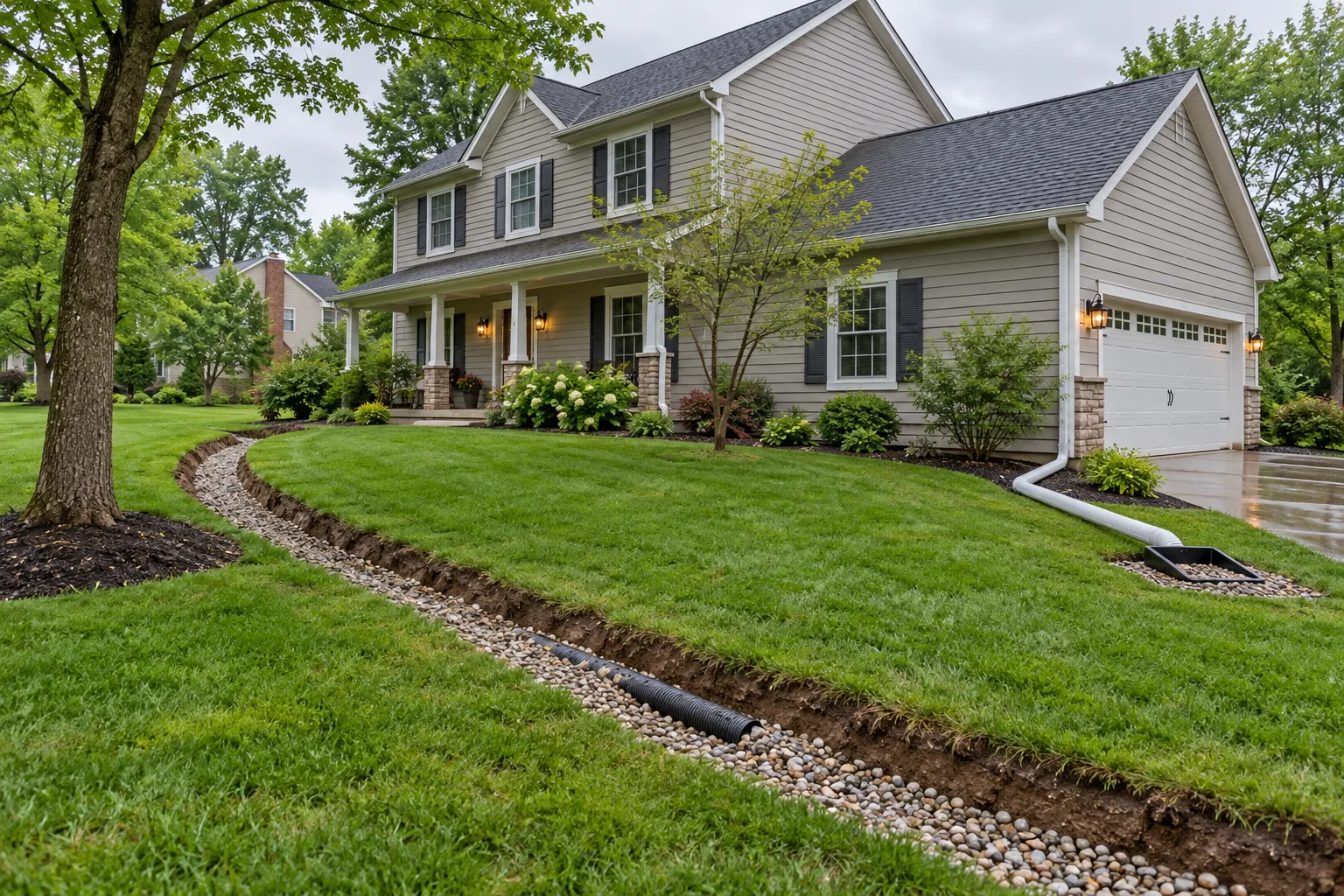
Dry well sizing and permits
A dry well temporarily stores runoff and lets it infiltrate into suitable surrounding soil. Verify infiltration and groundwater conditions before choosing a chamber.
How big does a dry well need to be, and do I need a permit?
A dry well temporarily stores runoff and lets it infiltrate into suitable surrounding soil. Verify infiltration and groundwater conditions before choosing a chamber.
Establish whether infiltration is suitable
Have the proposed location assessed for infiltration, seasonal groundwater, nearby structures and sensitive systems. Clay, saturated soil or limited separation may make a dry well unsuitable. Ask the local authority which drainage or stormwater approvals apply.
A generic distance from a building is not a substitute for local and product requirements.
Storage volume is not storm capacity
NDS lists 50 gallons of storage for one Flo-Well chamber. That product number does not establish how much roof or yard it can serve. Runoff volume, infiltration rate, contributing area and the design storm determine the required system.
The surrounding stone, chamber layout and overflow also affect performance.
Include debris control and overflow
Ask how leaves and sediment are kept out and where excess water goes when storage is full. Keep inspection or service access reachable. A blocked inlet or saturated receiving soil can prevent the system from working even if the chamber itself is intact.
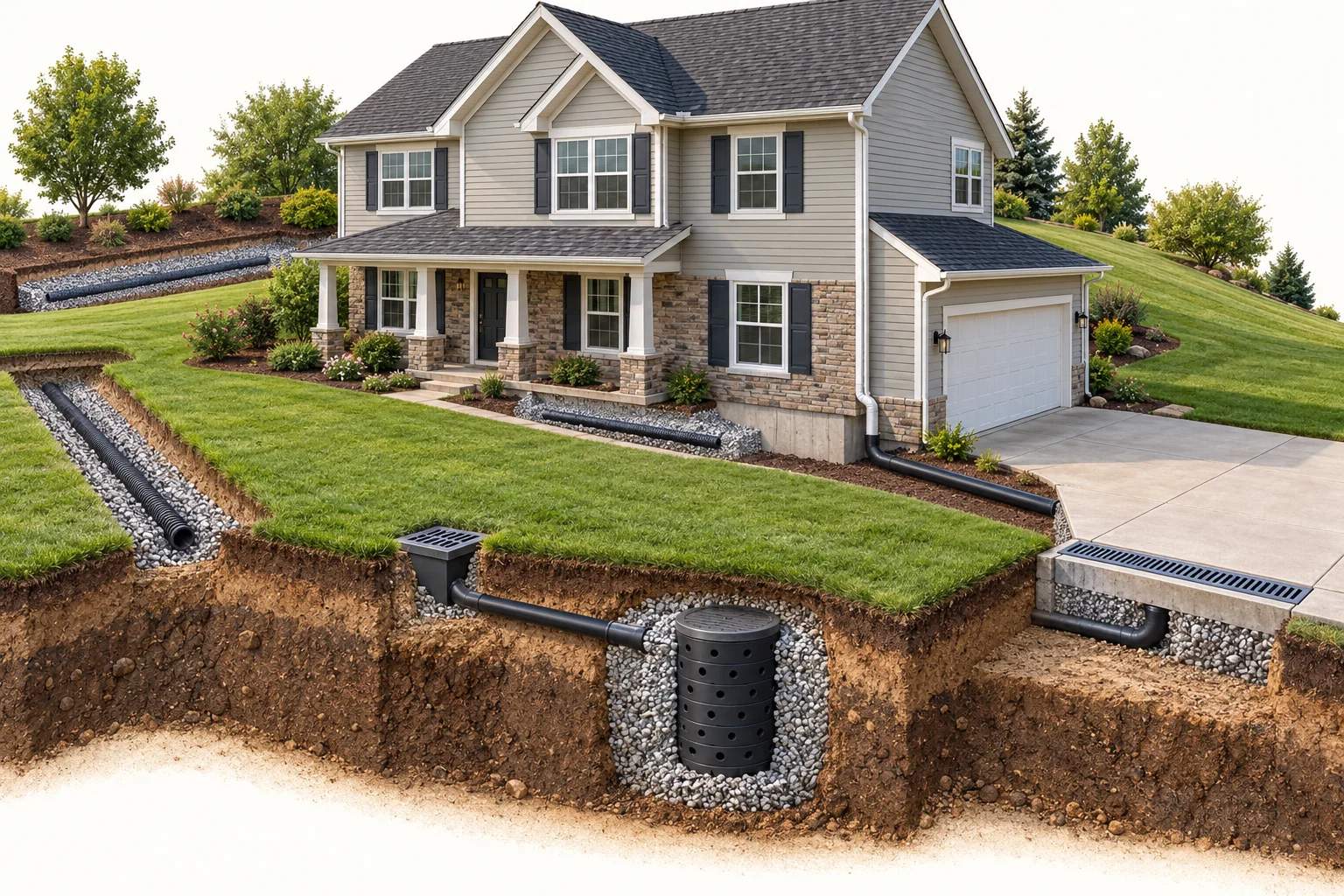
The illustration shows the concept, not a chamber sizing or excavation detail.
Request a site-specific installed scope
The published price band below is a basic planning allowance, not a promise for engineered stormwater storage. Rock excavation, multiple chambers, testing, permits and long pipe runs can change the project materially. Do not add a dry-well outlet charge when the selected job already prices that same well.
Questions to ask before work starts
Can a dry well replace every outlet?
Do I need a permit?
Sources
- S&S Excavation — published Kansas City French drain rates, checked 2026-10-26
- HomeGuide — French drain cost, checked 2026-10-26
- HomeGuide — drainage system installation cost, checked 2026-10-26
- Ledge — catch basin estimating, checked 2026-10-26
- HomeGuide — cost to level or regrade a yard, checked 2026-10-26
- Richmond Retaining Wall Company — grading planning rates, checked 2026-10-26