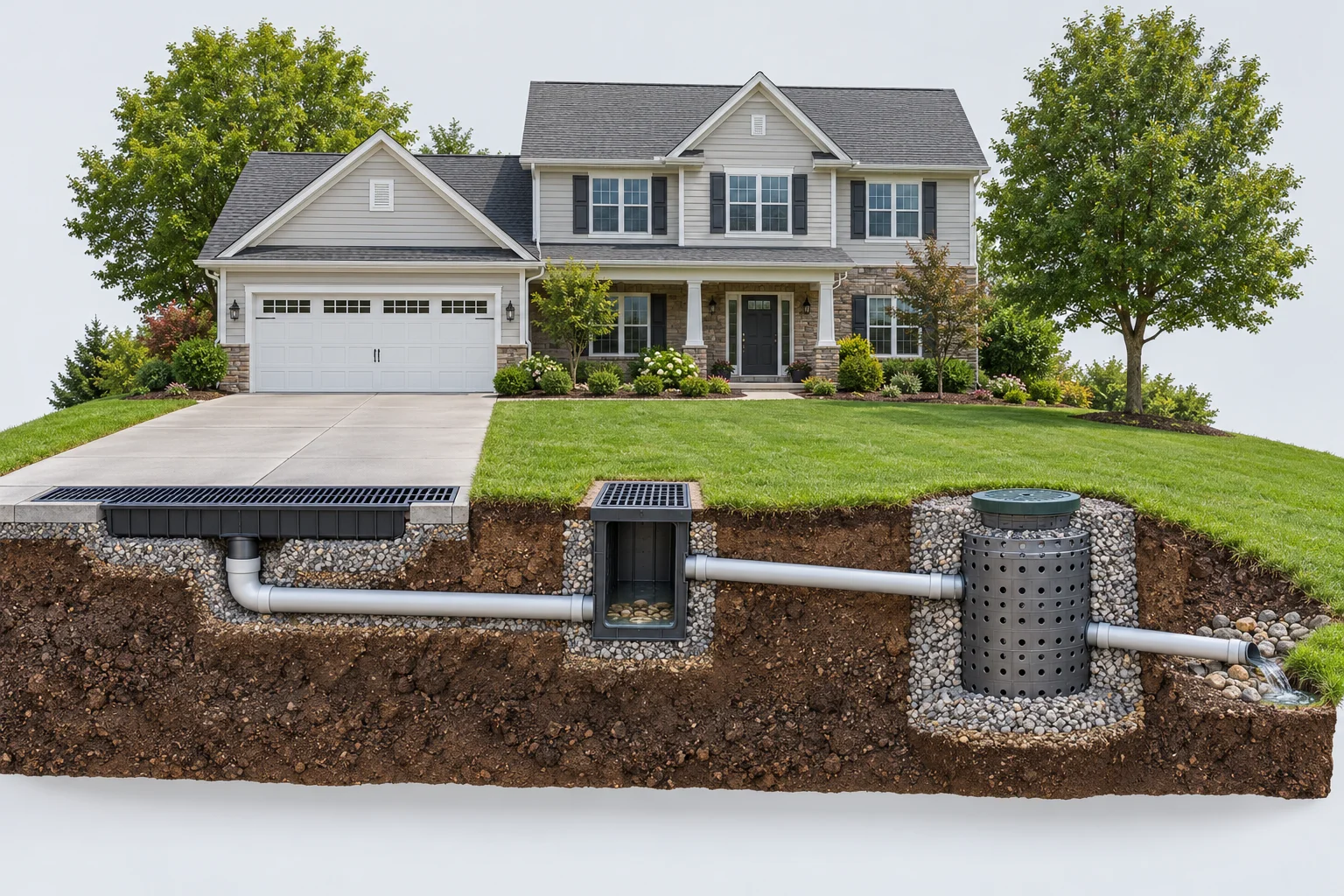
French drain installation, step by step
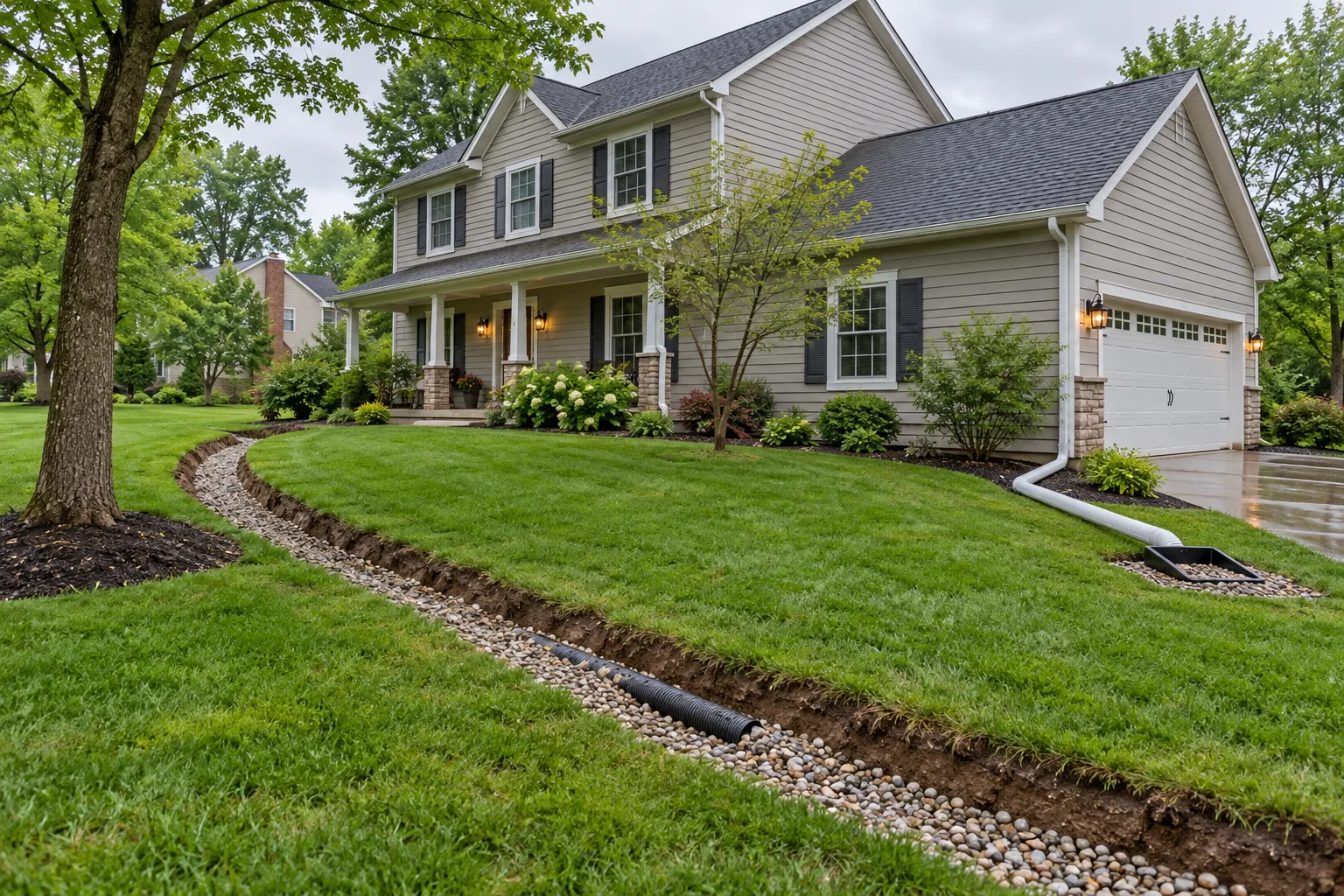
How is a French drain installed?
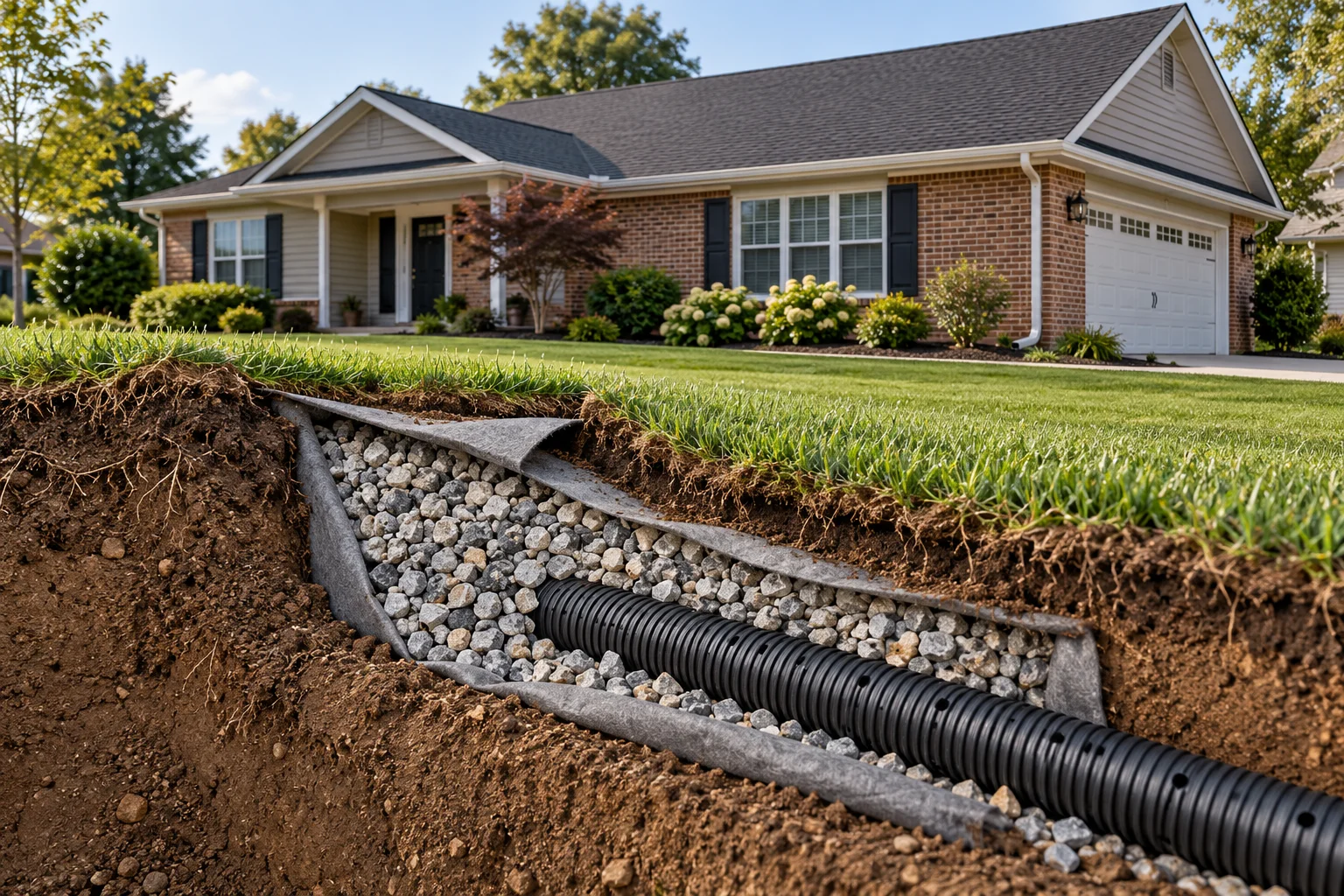
A pro finds where water collects and where it can leave, then digs a trench that falls steadily toward that outlet. The trench is lined with filter fabric and bedded with washed gravel, and a perforated pipe goes in with the holes facing down. More gravel covers the pipe, the fabric folds over, and the lawn goes back.
Most of the work, and most of the price, is the digging. The outlet decides whether it works: a pop-up emitter at lower ground, a dry well or an existing drain.
The steps a pro follows
- 1
Find the water and the way out
Watch where water sits after rain and where the yard runs lower. The outlet has to be lower than the wet spot, or the drain just holds water.
- 2
Call 811 before digging
811 is the free US call-before-you-dig line. Utility owners mark their buried lines so the trench can avoid them.
- 3
Mark the route
From the wet spot to the outlet, with a steady downhill fall the whole way. A low point in the middle traps water.
- 4
Dig the trench
By machine where a mini excavator can reach, by hand where it can't. Digging is most of the labor, which is why access changes the price.
- 5
Line it with filter fabric
Nonwoven fabric keeps soil out of the gravel, so the drain doesn't clog.
- 6
Lay gravel and the pipe, holes down
A bed of washed gravel, then perforated pipe with the holes facing down. Water rises into the holes and runs along the pipe.
- 7
Cover the pipe and fold the fabric
More gravel over the pipe, then the fabric wraps over the top before soil goes back.
- 8
Build the outlet
A pop-up emitter at lower ground, a dry well, or a tie-in to an existing drain. Ask where the water goes: that is what makes the drain work.
- 9
Put the lawn back
Sod, seed or bare soil. Ask which one the quote includes.
Inside the trench
DIY or hire a pro?
Doing it yourself
- You save the labor, which is most of the price.
- You own the hard parts: a fall that never dips, and an outlet that really takes the water.
- You still call 811 and dig the whole trench, by hand or with a rented machine.
Hiring a pro
- The pro answers for the slope, the outlet and the lawn repair.
- A written quote fixes the scope: length, route, materials, cleanup.
- Compare quotes against your own range before you agree.
What it costs
Installed yard French drains run $20–$45 per foot, typical $32.50 (as of Oct 2026). Ground, access and the outlet move the price. Hand digging only is priced at 1.45× the machine-dug rate. A pop-up outlet adds $30–$85, a dry well $300–$1,500, and new sod $0.90–$1.80 per ft².
Questions to ask before you hire
- 1How will the pipe slope, and where does the water leave?
The outlet decides whether the drain works. Ask to see it on the route.
- 2Is a permit needed, and who gets it?
Rules differ by city. Get the answer in writing.
- 3What fabric, gravel and pipe go in?
Ask for each in the written quote, so quotes compare like for like.
- 4How is the lawn put back?
Sod, seed or bare soil changes both the price and the result.
- 5What does the written quote include?
Length, route, outlet, materials, cleanup and the payment schedule.
Sources
- Rates: S&S Excavation — published Kansas City French drain rates, checked Oct 26, 2026 and HomeGuide — drainage system installation cost (Feb 6, 2026), checked Oct 26, 2026, checked Oct 26, 2026 (rates v1.0.0).
- Call before you dig: 811, run by the Common Ground Alliance.