How a French drain system works
A French drain gives water in wet soil a permeable collection path and a route toward a discharge point. The pipe alone does not solve the problem.
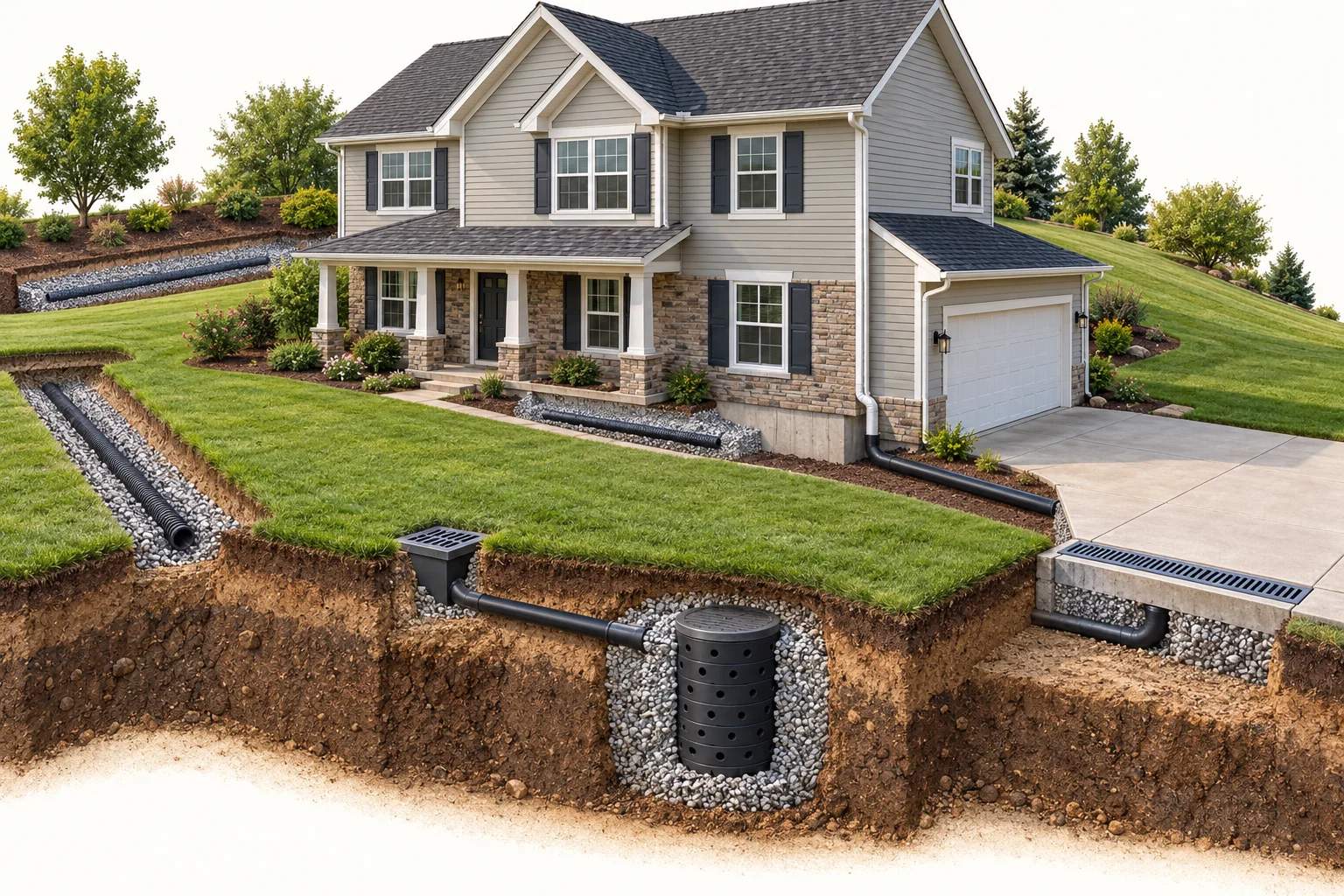
How does a French drain system work?
A French drain gives water in wet soil a permeable collection path and a route toward a discharge point. The pipe alone does not solve the problem.
Collection happens below the surface
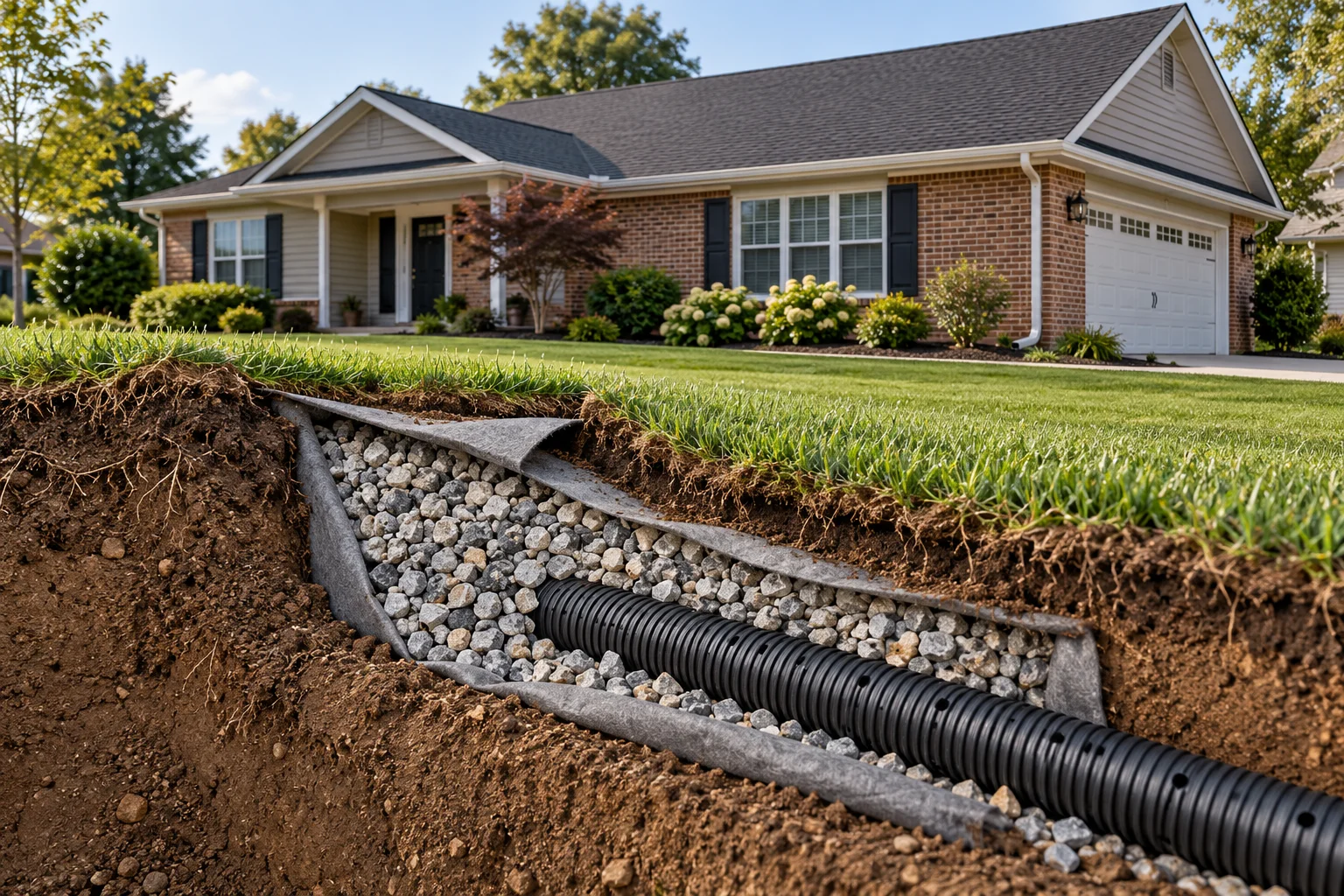
Water moving through soil can enter the gravel collection zone and the perforated pipe. Fabric and clean aggregate help keep native soil separate from the void space. A grated basin collects surface runoff differently: water must reach its inlet.
Choose collection hardware for the water source rather than calling every buried pipe a French drain.
The outlet completes the system
A gravity system needs a workable elevation relationship from collector to outlet. The route, pipe capacity and discharge conditions must be checked together. A dry well can provide infiltration where soil and groundwater conditions permit it, but it is not a universal substitute for an outlet.
Saturated ground may absorb little additional water.
Keep concentrated roof water separate
A downspout typically feeds solid conveyance pipe. Connecting that concentrated inflow into a perforated collection section can put roof water back into the surrounding ground. PNNL’s building-science guidance separates roof-water drainage from foundation drains.
Ask how the proposal keeps those functions distinct.
Recognize the limits
A collector cannot repair a leaking supply line, change a neighbor’s drainage rights or waterproof a basement wall. Clogging, a blocked outlet, poor elevations or an undersized system may all leave wet ground. Inspect accessible inlets and outlets and have recurring failures assessed before adding more pipe.
Questions to ask before work starts
Does the pipe need holes?
Will it drain every puddle immediately?
Sources
- S&S Excavation — published Kansas City French drain rates, checked 2026-10-26
- HomeGuide — French drain cost, checked 2026-10-26
- HomeGuide — drainage system installation cost, checked 2026-10-26
- Ledge — catch basin estimating, checked 2026-10-26
- HomeGuide — cost to level or regrade a yard, checked 2026-10-26
- Richmond Retaining Wall Company — grading planning rates, checked 2026-10-26