When can yard regrading improve drainage?
Yard regrading changes the surface so water follows a planned route. It needs a suitable destination and must respect adjoining property. It does not automatically replace a drain for groundwater or create an approved discharge point.
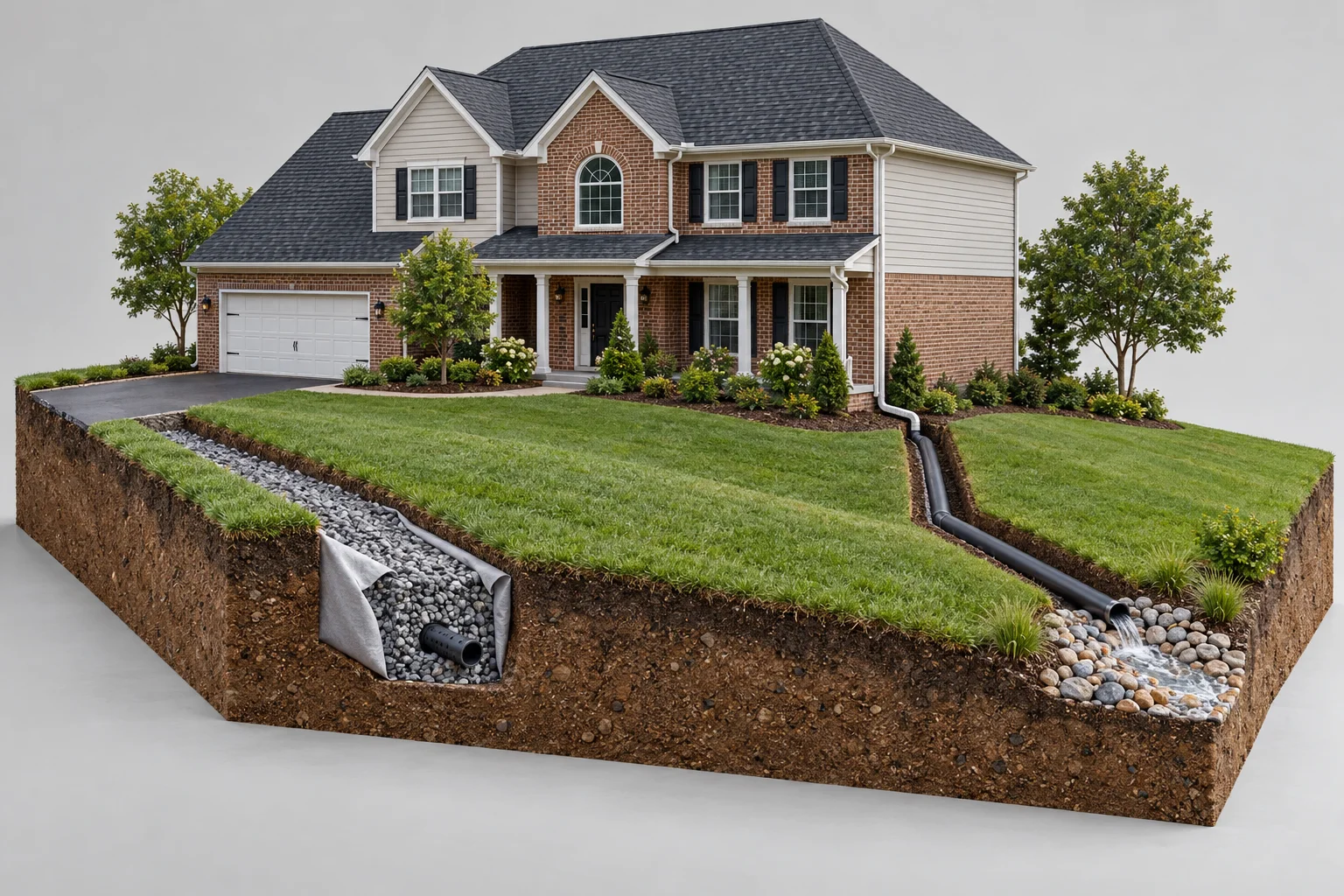
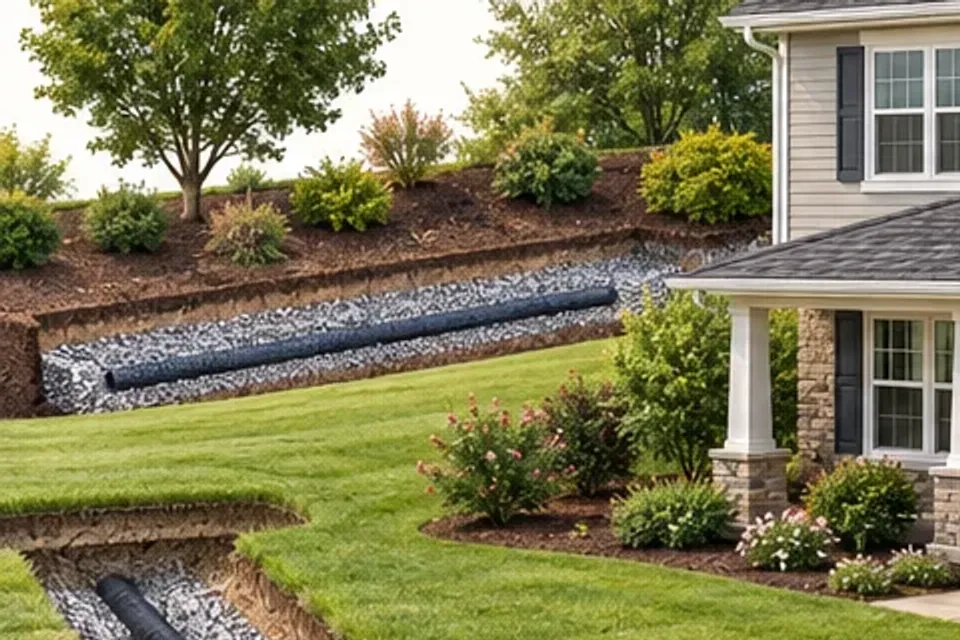
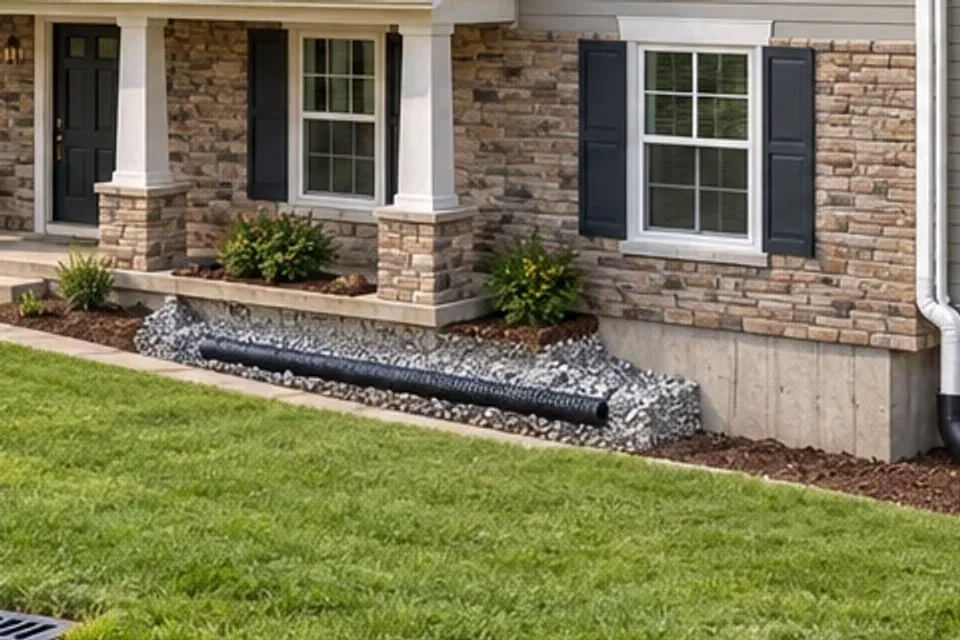
- Collect the waterA trench lined with filter fabric holds clean gravel and a perforated pipe. Water in soggy soil seeps into the gravel and pipe.
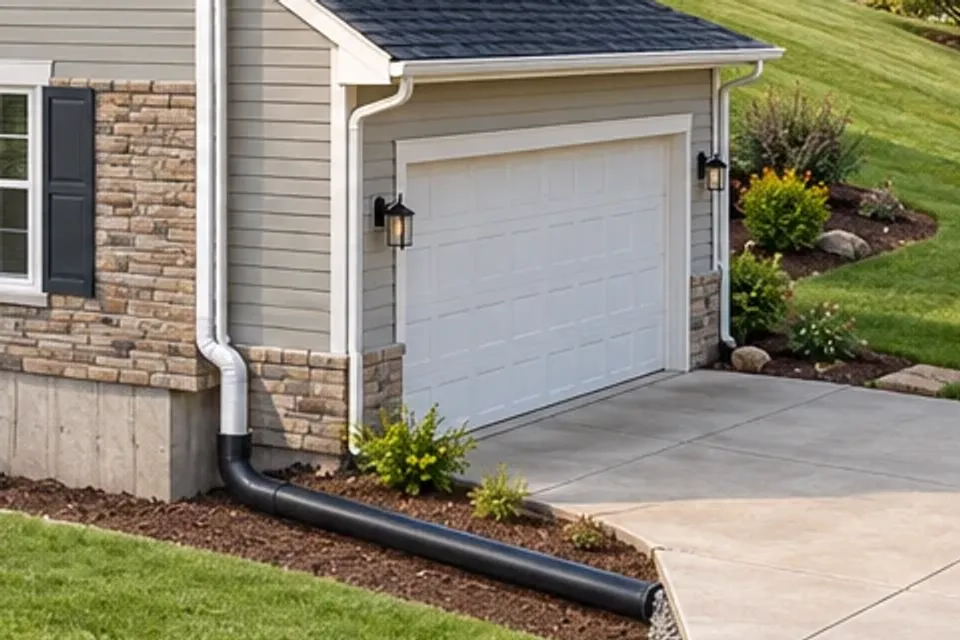
- Keep roof water separateDownspout water runs in its own solid pipe so it doesn't overload the drain.
- Let it out at lower groundThe pipe slopes to an outlet, here a pop-up emitter. A pro checks that the outlet can take the water.
Read the surface water path
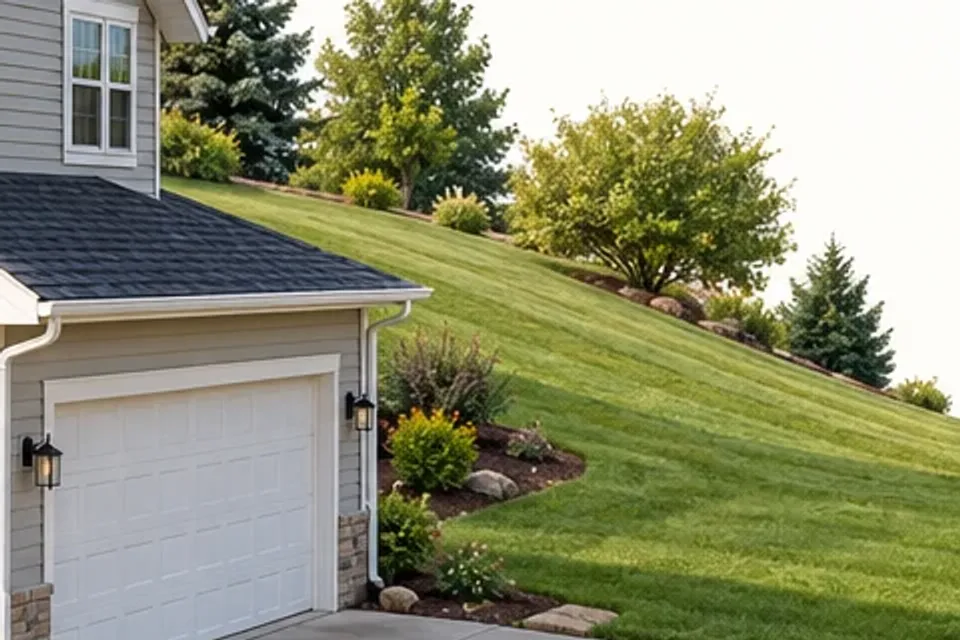
Look for depressions that fill during rain, soil sloping toward the house and muddy tracks left as water moves across the yard. Regrading addresses the shape of that surface. A wet lawn can also reflect roof discharge or groundwater, so changing the ground without identifying the source may leave the problem unresolved.
Ask the contractor to explain the existing and proposed water paths. The proposal should show where runoff goes after the reshaping, including where it crosses the edge of the work area and what happens near the house.
Define an area rather than a trench length
Yard regrading is priced by the area being worked. Mark the intended boundary and separate it from the area merely used for access or storage. A narrow depression and a broad change across the lawn are different scopes even if the property size is the same.
Ask how the area was measured and what finish is included. Do not multiply the rate by the entire lot simply because that area is easy to find on a map. The estimate should relate to ground that will actually be reshaped.
Discuss soil movement and imported material
A grading plan may move soil already on the property or require material to be brought in or removed. The published planning rate does not include imported fill, topsoil or sod. Ask bidders to describe those items separately and explain any assumptions about the existing soil.
The surface finish matters: reshaping ground is different from leaving a finished lawn. Keep disposal, delivery access and protection of retained planting in the discussion. A low headline area rate does not tell you what condition the yard will be in at handover.
Check boundaries and retained features
Changing surface levels can affect paths, fences, planted beds and neighboring ground. Ask the contractor how the proposed work meets those fixed features and whether local approvals or a survey are needed. This guide cannot establish a permissible slope or a boundary discharge rule for your property.
Resolve those constraints before soil is moved. If water has no suitable surface destination, the plan may need drainage collection as well as reshaping. Price that additional system as an explicit item rather than treating it as an automatic part of grading.
Agree how the finished surface will be checked
Ask how the final levels and runoff path will be reviewed before the contractor leaves. Keep the agreed work boundary and any drawings with the quote. After rain, compare the water path with the original problem and record ponding or erosion near the edges of the work.
Newly disturbed ground and planting may need care; ask for instructions specific to the finish supplied. A grading job is not complete merely because the area looks smooth. The reason for the work is that water reaches the intended destination without creating a new problem elsewhere.
See prices by quantity and what the package includes.
What the price covers
In the price
- Yard regrading
- Work described by the published package scope
Added or excluded
- New outlet and lawn restoration unless selected
- Permits, engineering, utility relocation and structural repair
Area-based planning range; excludes imported fill, topsoil and sod.
Area-based planning range; excludes imported fill, topsoil and sod. The worked example isolates the selected job so you can compare the underlying scope. A different outlet, a disturbed lawn or difficult access can change the project.
Ask which parts of a proposed price are already included in the package before adding a separate allowance. Keep a marked route or work boundary with the quote so a later change can be priced against the same starting point.
The calculator adjusts for surface and access. A lawn route with open access is a different basis from work through paving or an area that must be dug by hand. Tell each bidder about narrow gates, steps, planting and surfaces that must remain.
An aerial image cannot confirm buried utilities, soil conditions or the condition of an existing outlet. Checking terrain on the map does not update the price; confirm the ground conditions in the calculator.
Permits, engineering, utility relocation, structural repair, taxes and unlisted work are excluded from these planning examples. Ask for those items explicitly if the job needs them. Imported fill, topsoil and sod are also outside the yard-regrading base rate.
A contractor's written scope should explain the finish, cleanup and any work left for you after the drainage installation. Missing items are a reason to ask a question, rather than a reason to assume that the lowest total is complete.
How should I compare written quotes?
Before agreeing to work, walk the proposed route with the contractor and identify the original water problem, the collection area and the discharge point. Ask what will be tested or checked before excavation. A written description should identify the materials, the work boundary and what will be put back afterward.
Keep photographs of the problem and the agreed route; they give you something concrete to compare with the completed installation.
Doing the work yourself still leaves you responsible for finding utilities, checking local requirements and choosing a suitable outlet. Do not use a planning rate or a photograph as an excavation design. If the work approaches a foundation, crosses an uncertain utility route or requires a public connection, resolve those conditions with the appropriate qualified help before digging.
A contractor should explain the installation sequence and how the work will be checked before it is covered.
Ask for maintenance instructions, access locations and a record of the installed system at handover. Observe the same water path after rain and document any remaining problem so the installer can respond to a specific observation. Only a written agreement and service to your ZIP are established partner conditions today; no unverified licence, insurance, rating or workmanship claim is implied.
Yard regrading: costs and package scope
Sources
- HomeGuide — cost to level or regrade a yard, published 2026-01-16, checked 2026-10-26
- HomeGuide — drainage system installation cost, published 2026-02-06, checked 2026-10-26
- Richmond Retaining Wall Company — grading planning rates, checked 2026-10-26. Published planning rates, topsoil and vegetation separate