When does a curtain drain help with water coming down a slope?
A curtain drain intercepts shallow water coming from higher ground before it crosses the yard. It needs a route to a suitable outlet. A drain through an already soggy lawn serves a different purpose; compare a yard French drain before choosing the trench location.
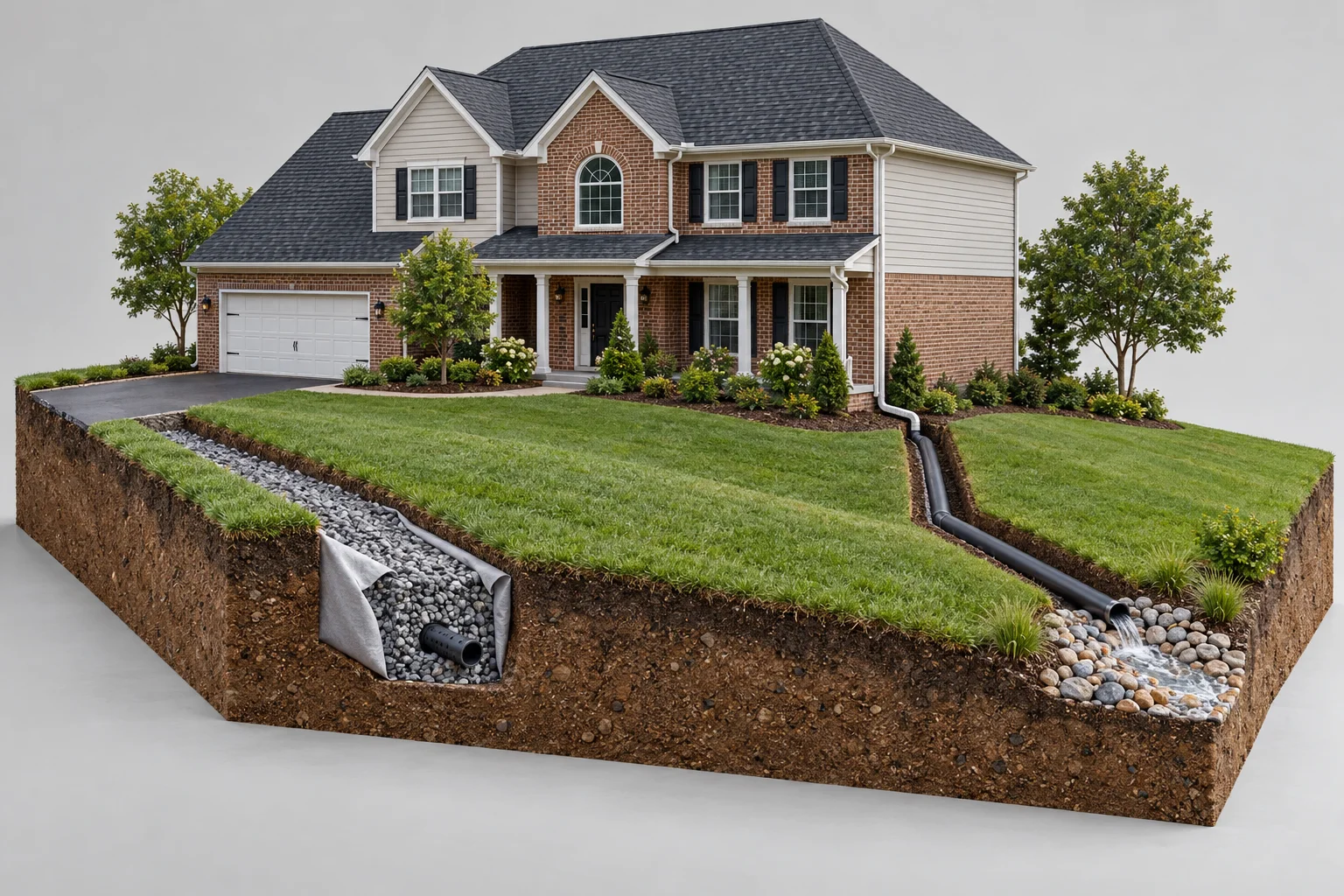
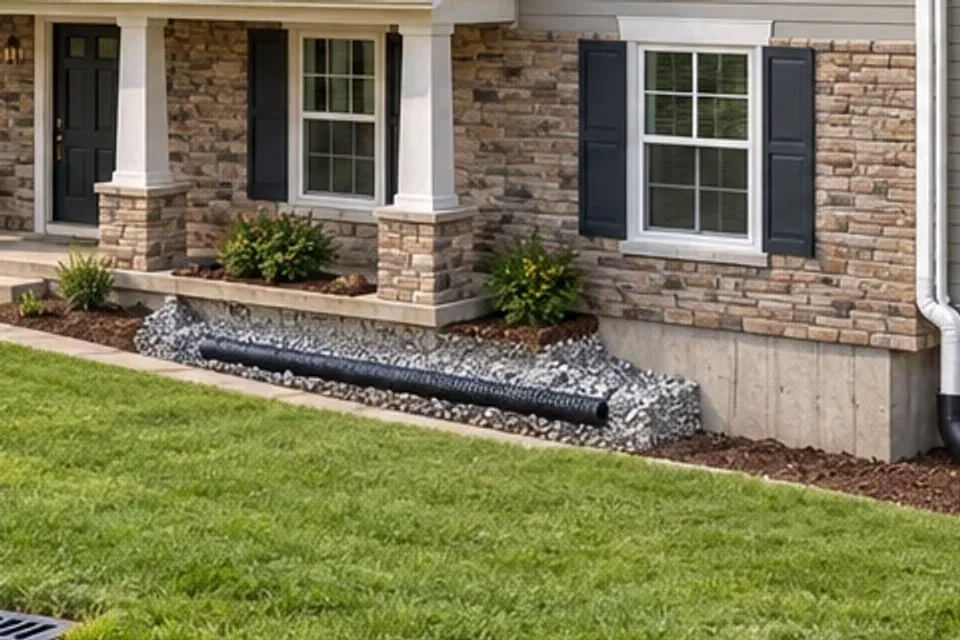
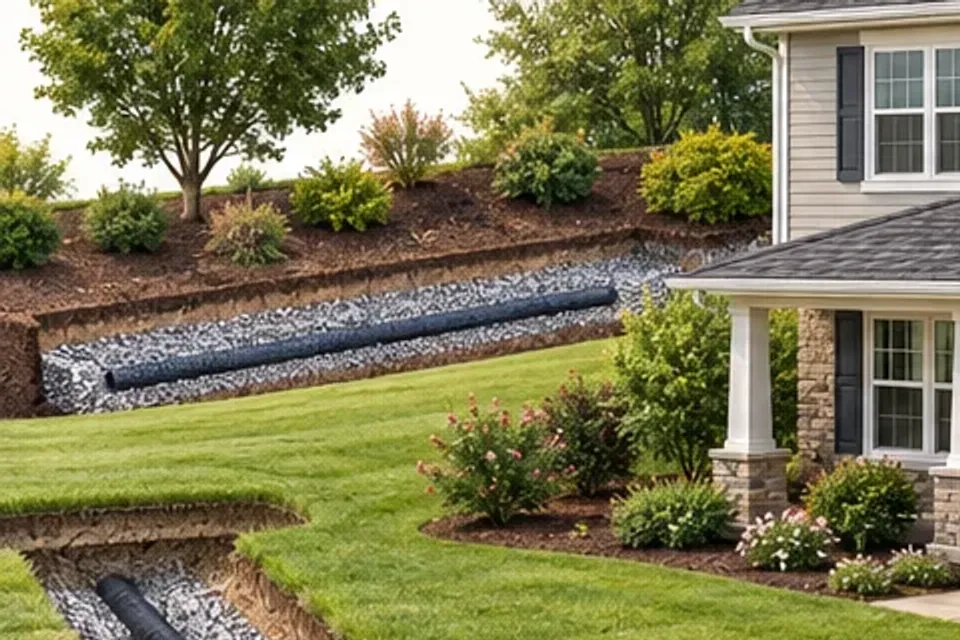
- Collect the waterA trench lined with filter fabric holds clean gravel and a perforated pipe. Water in soggy soil seeps into the gravel and pipe.
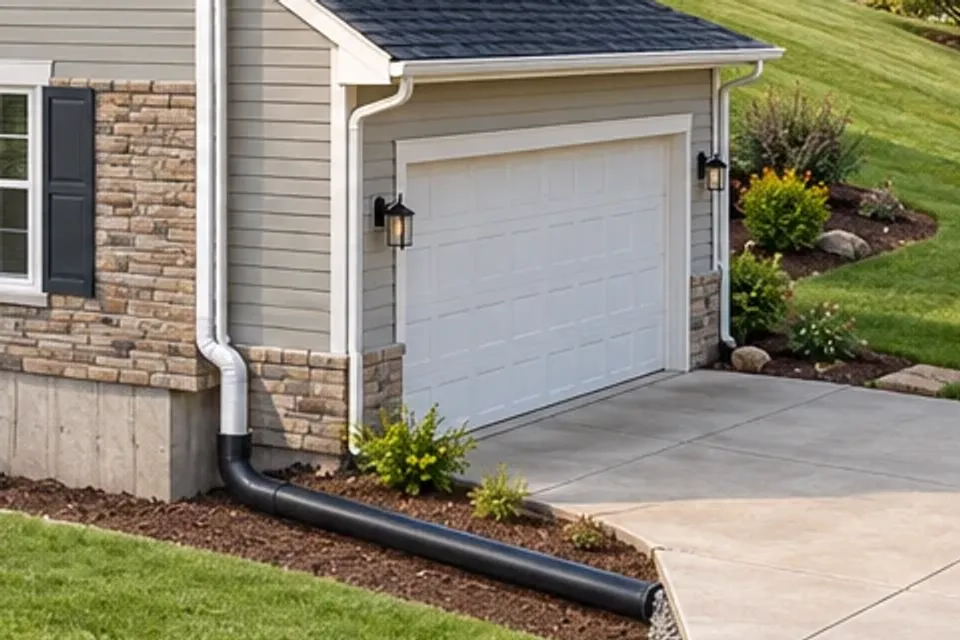
- Keep roof water separateDownspout water runs in its own solid pipe so it doesn't overload the drain.
- Let it out at lower groundThe pipe slopes to an outlet, here a pop-up emitter. A pro checks that the outlet can take the water.
Follow the incoming water
Watch the upper edge of the yard during rain, from a safe place. Look for a wet band along a retaining wall, a muddy path across the slope or water emerging where higher ground meets the lawn. These observations help a contractor distinguish water moving through shallow soil from runoff flowing over the surface.
A curtain drain is intended to intercept that incoming water. Putting it at the bottom of the yard may leave everything above it wet. Mark the affected area on a photograph and ask the contractor to explain why the proposed alignment crosses the water's path.
Plan the interception and the outlet together
The trench normally follows the area where water enters, but the pipe still needs a continuous route toward discharge. A line drawn across a slope does not prove that water can leave it. Ask where the collected water will go, whether the outlet remains usable during heavy rain and what happens when the receiving ground is already wet.
If the proposed outlet crosses a boundary, do not assume that a neighbor's permission or a public connection is available. Resolve the discharge arrangement before agreeing to an excavation route.
Understand what goes into the trench
A contractor should describe the filter fabric, washed aggregate and perforated collection pipe as a connected system. Soil must be kept out of the drainage space while water can enter it. Ask how the collection section changes to a solid conveyance pipe near the outlet and where cleaning access will be provided.
There is no universal trench size on this page: the intercepted water, ground conditions and available fall determine the design. A shallow drain should not be presented as a replacement for work at the foundation footing.
Keep surface runoff in the discussion
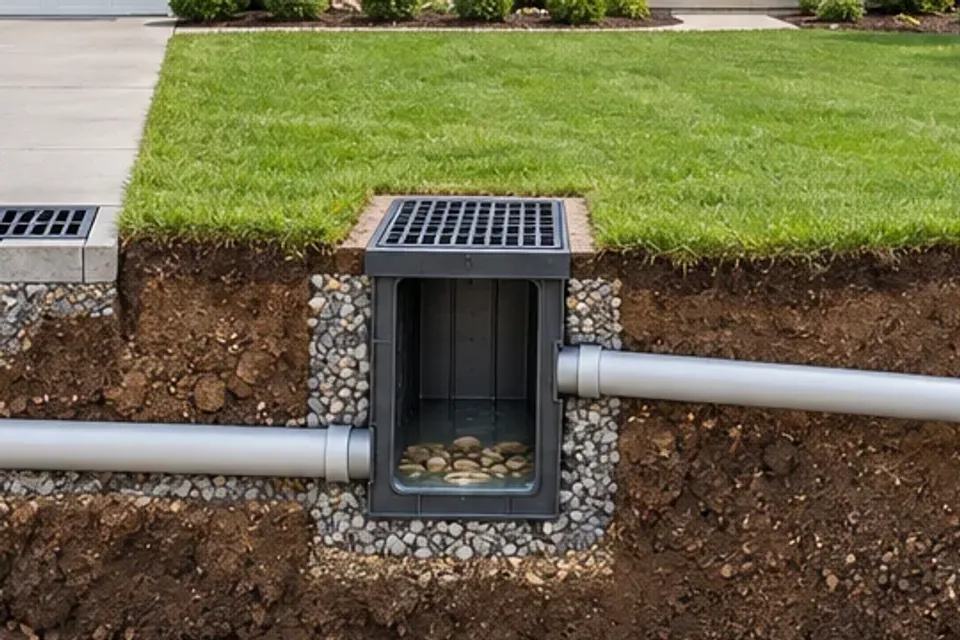
A strong stream flowing over the ground may need a surface collection approach rather than relying entirely on water entering a gravel trench. Ask the contractor to show the expected water path during ordinary rain and when the system is overwhelmed. Grading, a catch basin or another surface feature may be proposed alongside the curtain drain.
Those are separate scope decisions. Compare the alternatives against the same incoming water problem instead of buying a longer trench simply because the yard has more space.
Inspect the upper boundary after installation
After rain, observe whether the wet band has moved, whether water bypasses either end of the collection trench and whether sediment is washing onto the restored surface. Keep a record that can be compared with the original photographs. An outlet blocked by vegetation can make a correctly positioned drain appear ineffective.
Keep access to the outlet and cleanouts rather than planting over them. If the contractor proposes extending the drain later, ask what observation supports that change and whether the existing outlet can accept the additional flow.
See prices by quantity and what the package includes.
What the price covers
In the price
- Curtain drain
- Work described by the published package scope
Added or excluded
- New outlet and lawn restoration unless selected
- Permits, engineering, utility relocation and structural repair
Shallow exterior drain, installation scope must be checked.
Shallow exterior drain, installation scope must be checked. The worked example isolates the selected job so you can compare the underlying scope. A different outlet, a disturbed lawn or difficult access can change the project.
Ask which parts of a proposed price are already included in the package before adding a separate allowance. Keep a marked route or work boundary with the quote so a later change can be priced against the same starting point.
The calculator adjusts for surface and access. A lawn route with open access is a different basis from work through paving or an area that must be dug by hand. Tell each bidder about narrow gates, steps, planting and surfaces that must remain.
An aerial image cannot confirm buried utilities, soil conditions or the condition of an existing outlet. Checking terrain on the map does not update the price; confirm the ground conditions in the calculator.
Permits, engineering, utility relocation, structural repair, taxes and unlisted work are excluded from these planning examples. Ask for those items explicitly if the job needs them. Imported fill, topsoil and sod are also outside the yard-regrading base rate.
A contractor's written scope should explain the finish, cleanup and any work left for you after the drainage installation. Missing items are a reason to ask a question, rather than a reason to assume that the lowest total is complete.
How should I compare written quotes?
Before agreeing to work, walk the proposed route with the contractor and identify the original water problem, the collection area and the discharge point. Ask what will be tested or checked before excavation. A written description should identify the materials, the work boundary and what will be put back afterward.
Keep photographs of the problem and the agreed route; they give you something concrete to compare with the completed installation.
Doing the work yourself still leaves you responsible for finding utilities, checking local requirements and choosing a suitable outlet. Do not use a planning rate or a photograph as an excavation design. If the work approaches a foundation, crosses an uncertain utility route or requires a public connection, resolve those conditions with the appropriate qualified help before digging.
A contractor should explain the installation sequence and how the work will be checked before it is covered.
Ask for maintenance instructions, access locations and a record of the installed system at handover. Observe the same water path after rain and document any remaining problem so the installer can respond to a specific observation. Only a written agreement and service to your ZIP are established partner conditions today; no unverified licence, insurance, rating or workmanship claim is implied.
Curtain drain: costs and package scope
Sources
- HomeGuide — French drain cost, published 2026-02-05, checked 2026-10-26
- HomeGuide — drainage system installation cost, published 2026-02-06, checked 2026-10-26
- Richmond Retaining Wall Company — grading planning rates, checked 2026-10-26. Published planning rates, topsoil and vegetation separate