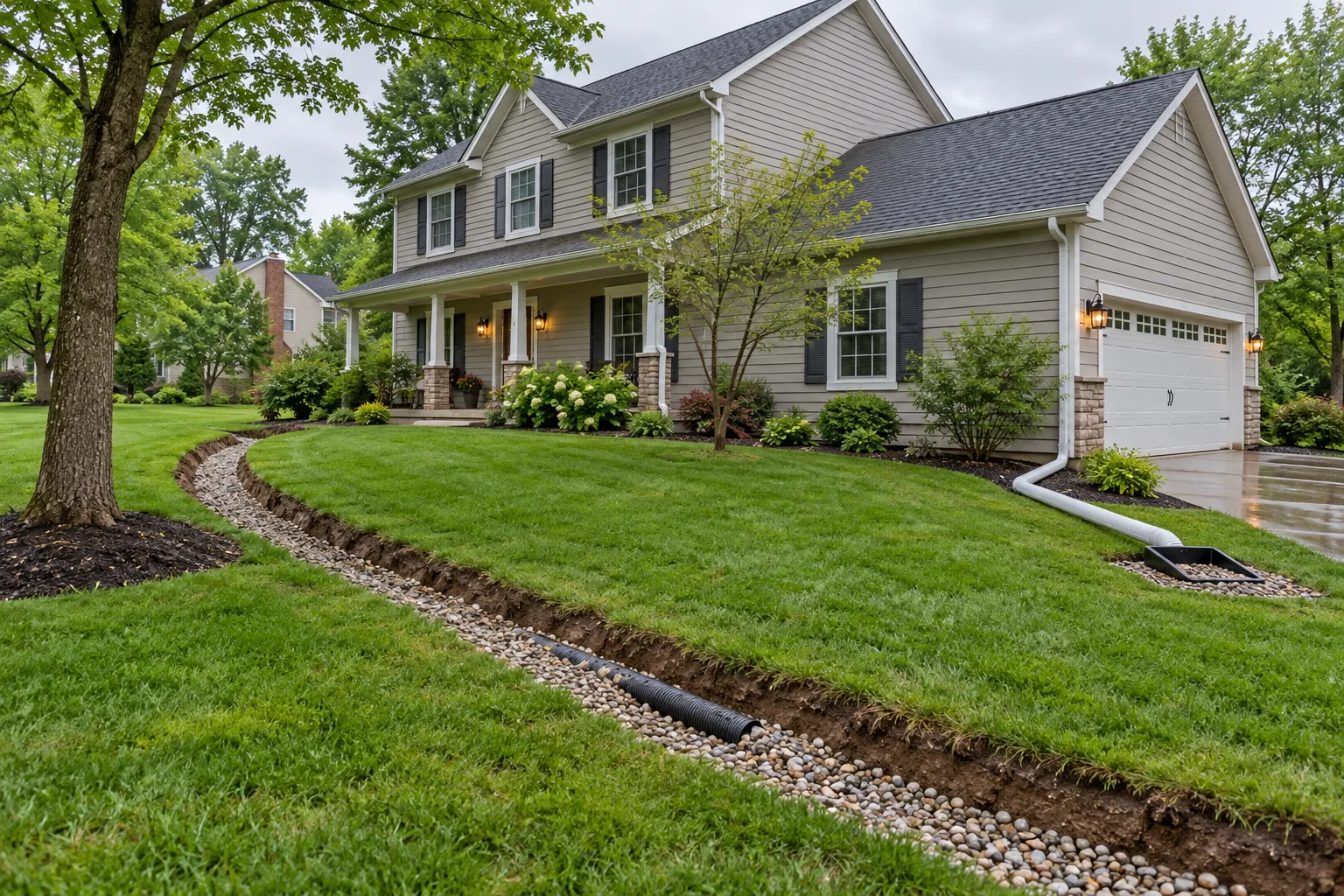
Downspout extensions compared
Choose the extension by the route water can take, the space people use and the access you need for maintenance.
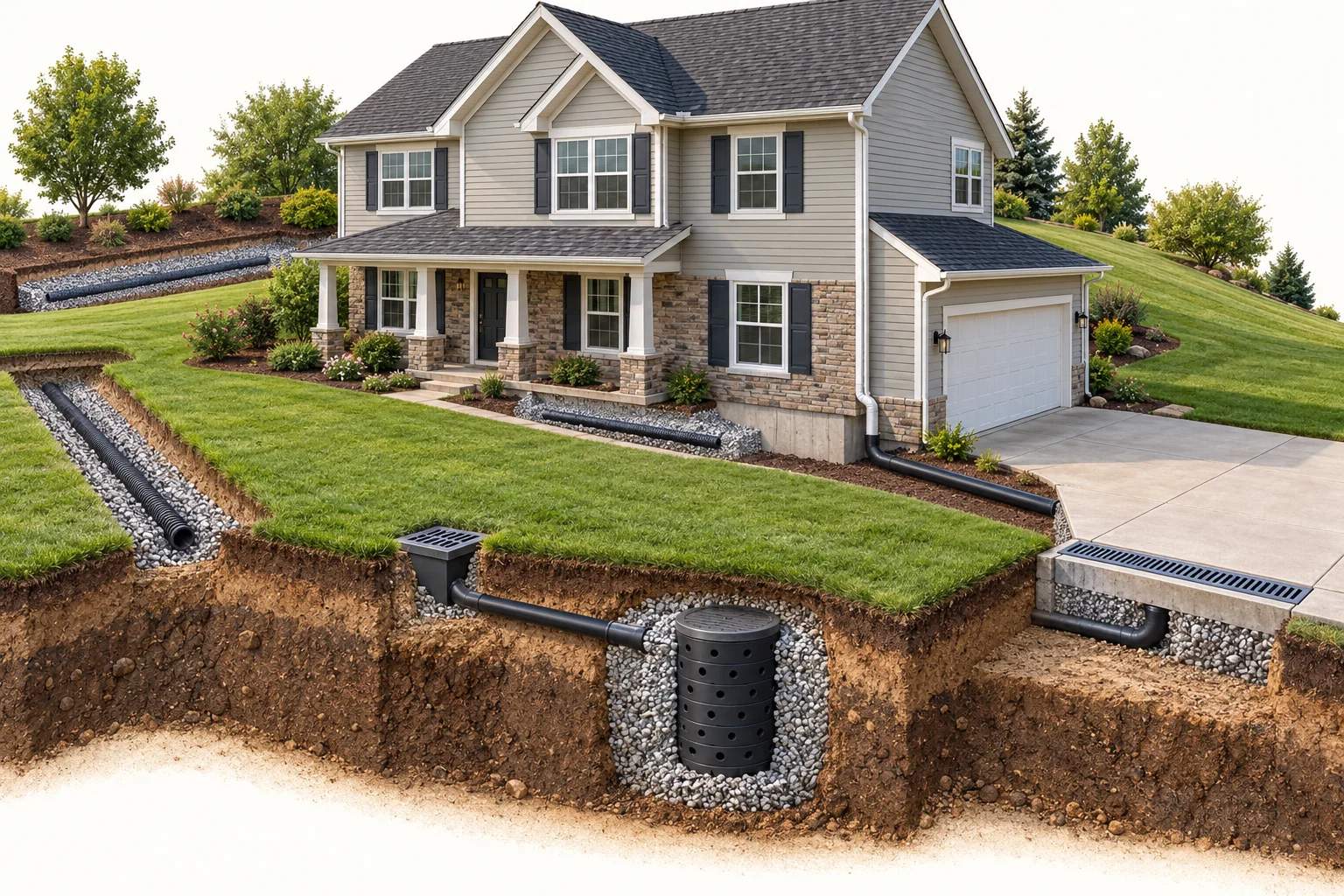
Which downspout extension should I use?
Choose the extension by the route water can take, the space people use and the access you need for maintenance.
Rigid surface extension
A rigid extension makes its route and discharge easy to inspect. It needs room on the ground and can interfere with mowing or walking. Check that the receiving surface carries water away instead of creating a new puddle.
Secure connections and inspect after lawn work or storms.
Flexible or roll-out extension
A flexible extension can work around small obstacles but needs a stable route that does not kink or hold water. Roll-out products reduce the visible footprint when dry, but their operation and durability depend on the specific product. Evaluate the actual outlet and maintenance needs rather than selecting by concealed length alone.
Solid underground pipe
A buried solid run can cross an open lawn without a permanent surface obstacle. Installation requires utility coordination, verified elevations and access for cleaning. Pavement crossings and a new outlet add work.
Confirm where the pipe ends and how the contractor will make that point visible and serviceable.
Compare the included work
The installed allowance below concerns downspout drainage work, not the retail price of a short extension. Ask separate questions about connectors, run length, excavation, discharge and restoration. If a surface extension solves the roof-water problem, a buried system may not be necessary.
Questions to ask before work starts
Which option is best for a walkway?
How far should it extend?
Sources
- S&S Excavation — published Kansas City French drain rates, checked 2026-10-26
- HomeGuide — French drain cost, checked 2026-10-26
- HomeGuide — drainage system installation cost, checked 2026-10-26
- Ledge — catch basin estimating, checked 2026-10-26
- HomeGuide — cost to level or regrade a yard, checked 2026-10-26
- Richmond Retaining Wall Company — grading planning rates, checked 2026-10-26